

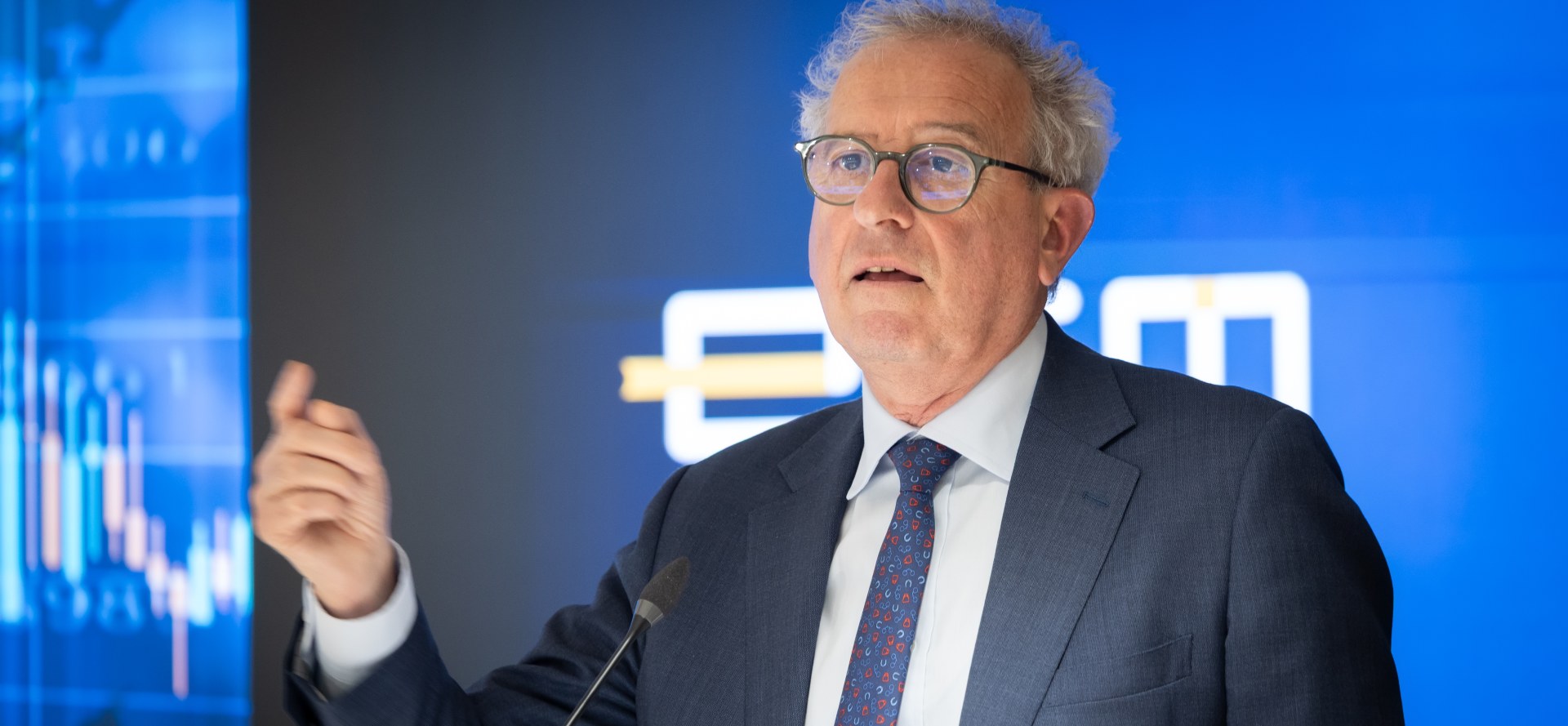
Pierre Gramegna, ESM Managing Director
Welcome speech at “Geopolitical disruptions and debt sustainability” conference
Luxembourg, 2 December 2025
(Please check against delivery)
Introduction
Good afternoon, ladies and gentlemen.
It is my great pleasure to welcome you to the conference “Geopolitical disruptions and debt sustainability” co-organised by the ESM and SUERF – the European Money and Finance Forum.
I would like to welcome all the participants: economists, researchers, and policymakers from across Europe and beyond. The presence of many distinguished experts here today highlights the importance and urgency of the issues we are addressing. Our world is experiencing rapid and often unpredictable changes triggered by the pace of geopolitical forces becoming a defining factor in shaping the global economic landscape.
These disruptions have undermined multilateral cooperation. They have also challenged the resilience of our fiscal frameworks and are testing our ability to maintain debt sustainability.
These challenges require a comprehensive response, which I will address through four key themes in my speech:
1. The importance of growth for debt sustainability
2. The Stability and Growth Pact
3. “Spending smarter”
4. The relevance of debt sustainability for the ESM
1. The importance of growth for debt sustainability
In the face of the pressing challenges I described, what is the most effective approach that should be taken? It is boosting sustainable economic growth; this is the foundation for strong and stable public finances.
When economies expand, tax revenues increase, employment rises, and businesses flourish. More economic activity automatically improves a country’s fiscal position without the need for painful budget cuts or tax hikes.
When GDP grows faster than the interest costs on government debt, the debt-to-GDP ratio falls naturally. This means public debt becomes easier to manage - not just by spending less, but by increasing the economic “pie.”
As we know, Europe has faced persistently low productivity and economic growth for many years. In real terms, the euro area has grown by 15% cumulatively over the past decade, compared to nearly 30% for the United States.
The euro area’s stagnant productivity growth, which remains well below that of major global peers acts as a significant drag on long-term economic performance. To illustrate: the euro area’s productivity growth [real GDP per employee growth rate, annual average 2013-2023] is 0.6%, compared to 6.4% in China and 1.2% in the US. This is the result of a gap in innovation, technology adoption, and entrepreneurship, which compounds with an ageing population.
As you recall, the Nobel Prize in Economics was awarded in October to economists [Joel Mokyr, Philippe Aghion, and Peter Howitt] who highlight how innovation is a key driver of sustained economic growth.
The challenges we face today can be at the same time a key opportunity and a turning point for change. The consequences of the pandemic, new global tensions, and climate imperatives have put growth back at the top of the policy agenda.
Europe has an opportunity to close the gap, but this will require bold reforms and investments. The Draghi and Letta reports provide a roadmap for European growth. And most of the measures outlined in these two reports depend on whether EU member states can coordinate and act in concert.
They emphasise the need to increase investment in innovation, research, and new technologies. A deeper, more efficient Single Market can unlock opportunities for businesses and consumers across the continent. This is even particularly crucial, considering the rise of protectionism around the world and the EU’s high dependence on trade for its GDP.
This includes creating a savings and investments union (SIU), which could channel savings into long-term investments, thereby supporting the EU’s broader economic objectives. It would also allow companies to secure the resources they need to scale up and invest in new technologies.
Furthermore, in today’s turbulent world, higher defence spending is not just a necessity for security it can also be a lever for economic growth, if properly implemented. Defence projects can drive supply chains and boost manufacturing although the exact GDP multiplier depends on the degree of linkages to civilian industries, the composition of defence spending, the import component, and how spending is financed.
Economic growth alone, however, is not enough. It must be supported by a fiscal framework that balances discipline and investment which brings us to the role of the EU’s Economic Governance Framework, which relies also on the Stability and Growth Pact (SGP).
2. The Stability and Growth Pact
Under the previous rules, most of the emphasis was placed on deficit targets often overshadowing the importance of spending composition and supporting growth. Mechanically binding rules encouraged consolidation as an absolute priority, often outweighing country-specific circumstances and the economic cycle of a country.
This has sometimes led to underinvestment in public goods and infrastructure. Experience has shown the need to strike a better balance between discipline and investment to achieve a policy mix that is at the same time sustainable and growth-friendly.
Productive public investment, such as in infrastructure or research can have immediate positive effects on the economy through multiplier effects. In the longer term, these investments enhance productivity and innovation creating a compounding effect that benefits future generations.
The reformed SGP now provides greater flexibility. Each Member State can negotiate its own multi-year path for adjusting net expenditures, tailored to its specific economic circumstances. This approach allows countries to address their unique challenges while aligning with and reaching overall EU goals of debt-to-GDP and annual deficits.
Furthermore, Member States have the option to extend their adjustment period from four to seven years if they make credible commitments to reforms or investments that improve resilience and fiscal sustainability. This encourages long-term thinking rather than short-term fixes.
That said, flexibility cannot be stretched too far as too much flexibility undermines credibility. Adjustment paths must remain realistic and credible to maintain trust among partners and markets.
Generally speaking, the reformed pact builds on trust and national ownership, rather than sanctions. Ultimately, its success will depend on genuine political commitment from leaders and a culture of responsible policymaking.
So the mere existence of the revamped Stability and Growth Pact is a privilege as it guides political action in a coherent way, accepted by all partners. This is particularly precious at a time of geopolitical turmoil.
Looking ahead, Europe faces complex challenges: defence, productivity, climate change, and population ageing. Addressing these will demand significant levels of spending, far beyond what individual budgets can handle alone. This reality forces us to set clear priorities, deciding where resources can have the greatest impact.
Moreover, tackling these issues collectively rather than individually is far more efficient especially when it comes to providing public goods like clean energy, security or infrastructure. I would like to address this topic under the theme of “spending smarter”.
3. Spending smarter
If every country tries to address EU-wide challenges purely through national efforts, it leads to inefficiency and duplication of resources. Collective problems need collective solutions. Otherwise, resources are diluted, outcomes are uneven and, most of the time, less than satisfactory.
Effective EU coordination is essential for delivering results that match the scale of our challenges and uniting the necessary resources. Coordinated, cross-border action allows for bigger, bolder projects than any one country could manage alone.
The SAFE initiative for financing defence expenditure, proposed by the European Commission in May 2025, is a good example of such coordinated action. It will provide €150 billion in loans to Member States, acting together, easing the burden on national budgets. 19 countries have requested loans, with Poland, Romania, Hungary and France due to receive the largest amounts.
This is only the beginning; coordinated action and common financing for security as a common good will become permanent in the future. It will also increase the amounts of European safe assets available.
We have also been able to act together in the aerospace sector where joint ventures like Airbus have demonstrated the benefits of pooled resources. We should apply this same collaborative approach to other critical areas, such as climate resilience, digitalisation and innovation.
At national level, resources should be allocated more efficiently toward these high-impact priorities. Lower-priority fields, such as outdated subsidies or redundant programmes, need to face savings. While these decisions can be difficult, they are essential for long-term success.
By spending smarter - both nationally and collectively - Europe can tackle structural challenges in a more effective way. This strategy will help future-proof Europe's economy, making it more resilient to geopolitical shocks and better positioned for prosperity.
4. The relevance of debt sustainability for the ESM
As we discuss smarter spending and fiscal rules, it's important to highlight how debt sustainability is at the core of the ESM’s mission. Ensuring that debt levels remain manageable is vital for several reasons.
It helps the ESM to safeguard financial stability in the euro area, protect its interests as a lender and maintain the confidence of investors and markets in the sovereign debt of euro area countries. Debt sustainability analysis (DSA) is key not only to reassure creditors when countries have benefitted from ESM assistance. It is also key to prevent crises; in other words, it contributes to ensuring that countries with healthy spending paths and reasonable debt-to-GDP stay the course.
Therefore, a key part of the ESM’s work is to assess to what degree a country’s public debt is sustainable. Debt sustainability analysis (DSA) is used for that purpose. It helps identify risks to debt sustainability at an early stage and informs policies to mitigate those risks.
The ESM has developed a sophisticated DSA toolkit, whose latest addition (the ESM Stochastic DSA tool) is described in a new issue of our research series ESM Briefs published yesterday and available on the ESM website.
The ESM’s approach combines model-based estimates with country-specific expert judgment that looks not at a single forecast, but at thousands of possible futures. It helps us understand the chances that a country’s debt stays on a safe path, even when the economy faces uncertainty. This ensures that assessments of debt sustainability reflect both historical regularities and institutional expertise.
Let me also mention an insightful research study prepared by ESM staff members and external co-authors, which will be presented tomorrow: “Funded and unfunded fiscal shocks – inflation dynamics in the euro area”. It explores the relationship between public spending, growth, and inflation dynamics in the euro area and the importance of appropriate coordination across policy authorities.
Conclusion
Ladies and gentlemen, let me conclude. Debt sustainability is not only a technical benchmark. It embodies Europe's collective determination to secure a sustainable, secure, and prosperous future.
This commitment is more urgent than ever as we live in a world defined by geopolitical shifts and unpredictable shocks. Europe’s response must be to combine prudence and boldness.
Prudence in managing public finances with boldness in investing in innovation, resilience, and effective partnership.
Thank you.
Contact