Pierre Gramegna's keynote speech at Capital Markets Seminar 2026

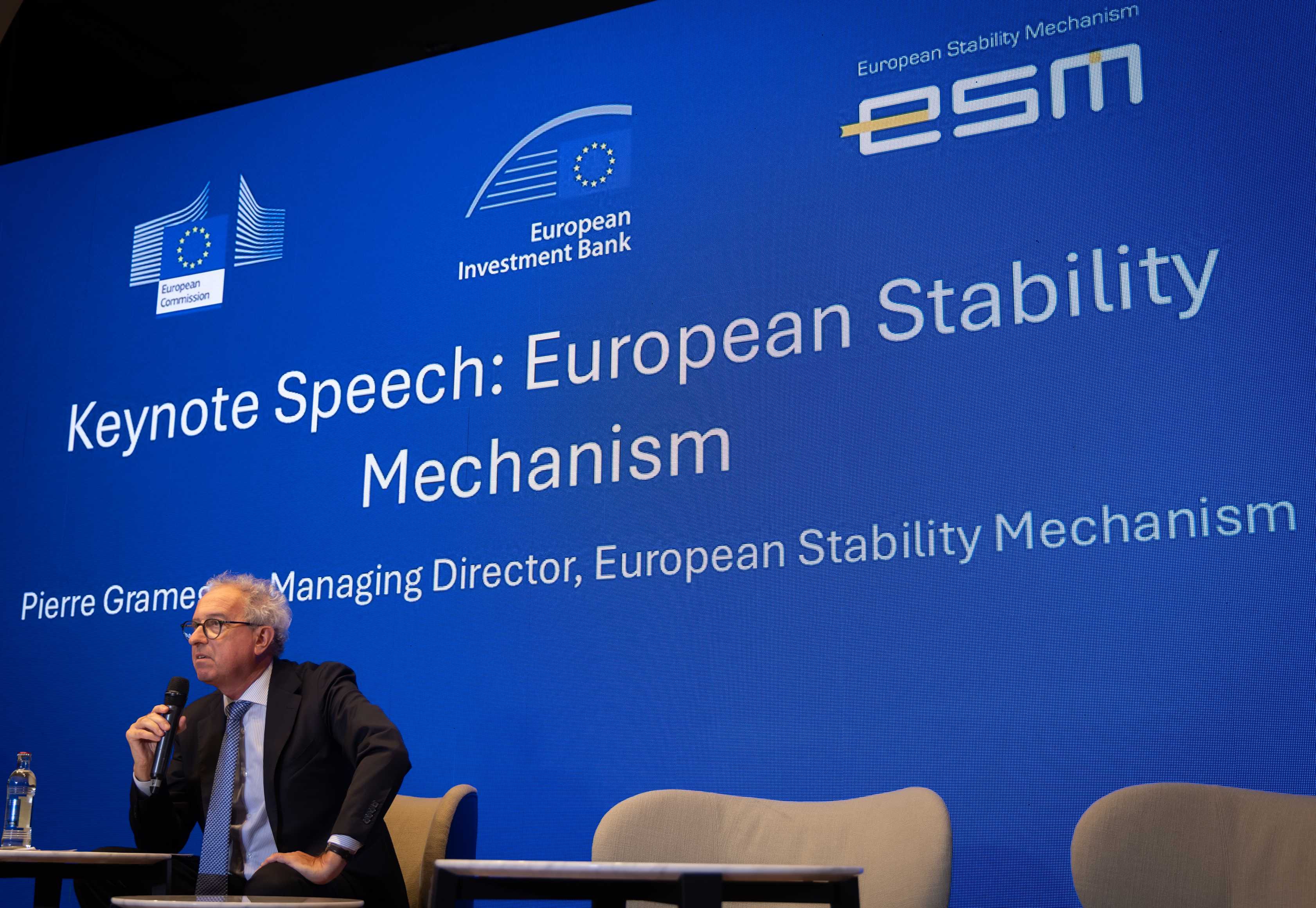
Pierre Gramegna, ESM Managing Director
Keynote speech at Capital Markets Seminar
Luxembourg, Wednesday 30 September 2026
Check against delivery
Introduction: A changing world creates an opportunity for Europe
Ladies and gentlemen,
It is a great pleasure to be with you today at the 8th annual Capital Markets Seminar.
The seminar has become an established meeting point for the capital markets community, bringing together investors, issuers and policymakers – three perspectives on the same market. When those perspectives meet, we gain a better sense, not only of where markets stand today, but also of the structural shifts reshaping them.
It is also a particular pleasure to join Nadia Calviño among today’s speakers. Nadia and I have something in common: we both served as finance ministers during difficult years for Europe. Today, we lead two European institutions whose roles are to make Europe stronger.
Over time, Europe has moved from emergency action to building permanent common lending and investment capacity. When confronted with major challenges, Europe has repeatedly shown that it can rely on its common institutions – the European Stability Mechanism (ESM), the European Investment Bank, and the European Commission. Together, these institutions demonstrate what Europe can achieve when it acts collectively. That capacity matters all the more today.
We are meeting at a moment when the global financial landscape is changing. Geopolitical fragmentation is increasing. One striking sign is the number of armed conflicts worldwide. It was reported last year that the number was around 130 - more than twice as many as in 2009. [1]
These developments are also changing the risk landscape. Investors around the world are reassessing long-established assumptions, and concern over the United States’ fiscal position and the outlook for its financial markets is rising significantly. US national debt has now surpassed $40 trillion, or 126% of GDP, while the yield on the 10-year Treasury has risen above 5%, reaching its highest level since 2007. The implications reach far beyond US borders, given the country’s central role in global financial markets.
At the same time, international demand for euro-area sovereign debt is strengthening, while more issuers outside Europe are choosing to borrow in euros. For example, US companies are set to issue a record amount of euro-denominated bonds this year; issuance has already surpassed €150 billion. Sovereign bond issuance in euros by non-euro countries also set a new record last year, at €67 billion, with similar momentum continuing in 2026.
This creates an opening for Europe. For many years, Europe’s “soft power” stance on the world stage was sometimes presented as a weakness: too cautious, perhaps even a little boring. But in today’s polarised and fragmented world, investors increasingly recognise that respect for the rule of law, strong governance, and international cooperation are premium assets, especially when they are in short supply. Strong institutions and a robust legal order are thus becoming a magnet for capital.
But we should be careful. An opportunity is not the same as an achievement. The question is whether Europe can turn renewed confidence into investment, growth, and greater strategic strength.
Let me focus on two issues.
First, Europe has become more resilient; it now needs to become more investable.
Second, the digital transformation of finance offers Europe an opportunity to build tomorrow’s integrated capital market, rather than simply repairing yesterday’s fragmented one.
1. From resilience to investment
Let me begin with resilience.
The euro area crisis exposed serious weaknesses in our monetary union. We did not have the instruments needed to respond to a sovereign-debt crisis. Europe responded by building the institutions and instruments for financial stability, including the ESM.
The ESM and its predecessor, the European Financial Stability Facility (EFSF), provided nearly €300 billion in loans to five countries. Those programmes required solidarity from the euro area and difficult reforms from the countries concerned. But look at where we are today. Their economies are currently among the best performing in the euro area, growing above euro area average. And loans are being repaid. Spain, for example, will complete the repayment of its ESM loans, totalling €41 billion, next year.
The euro area also remains an attractive project. Bulgaria became the 21st euro area member state on 1 January this year and the 21st Member of the ESM last June. It is the fourth country to join since the institution was created in 2012.
The ESM itself recorded a net profit of almost €2 billion last year. This was allocated to reserves, further strengthening its capital base. The institution created in the middle of a crisis has matured into a permanent pillar of the euro area. The ESM strengthens confidence in the resilience of the euro area and, ultimately, in the bonds issued by its sovereigns.
Through ESM issuance, investors also gain access to European safe assets. The ESM, the EFSF, the European Union, and the EIB are now major issuers in global markets. Together, they give investors access to a growing pool of high-quality euro-denominated bonds, totalling €1.5 trillion. These assets support liquidity, provide reference points for pricing, and help strengthen the international role of the euro. This is also part of what makes Europe attractive to investors today.
But resilience is only a foundation. Europe’s larger challenge is growth. We do not lack innovation, research, engineers or capital. But we are not good at channelling capital towards investment, and we are particularly weak at scaling up. This is all the more striking because Europe has very substantial savings. European households and non-financial companies hold more than €15 trillion in bank deposits.
We also have very substantial investment needs in energy, defence, digitalisation and innovation, as well as those arising from an ageing society. As Mario Draghi estimated in his speech in Aachen in May this year, these needs amount to €1.2 trillion per year. This is up from the €800 billion cited in his 2024 report, and three quarters of the total will need to be mobilised through the private sector. The paradox is that we have both the money and the projects, but we do not connect them well enough.
This is why the Savings and Investments Union matters. It is about offering European savers more opportunities to invest across Europe and allowing capital to move to where it can produce the greatest economic return.
Significant progress is being made. Through my participation in the monthly Eurogroup meetings of euro area finance ministers, I see directly the role ministers play in shaping this agenda and turning it into concrete action. Work is advancing on securitisation, insolvency frameworks, and the integration and supervision of European capital markets. These may sound like separate files, but they are not. Together, these legislative initiatives will help bring national markets closer together and move Europe towards a single capital market.
2. Digital finance as a force for integration
This brings me to my second point: digital finance. When people hear “digital finance”, they often think first about faster payments, faster settlement, and lower transaction costs. All of that matters. But I believe the bigger opportunity is integration.
Europe’s present capital-market infrastructure remains highly fragmented. We have many trading venues, clearing houses and securities depositories, many of them serving national markets. In fact, more than 95% of settlement activity still takes place within central securities depositories that are largely national.
We are now at a crossroads. A new financial architecture is being built around tokenised assets and digital money. We should not reproduce our existing fragmentation in digital form. Instead, we should design integration into the system from the beginning. Normally, European integration means dismantling barriers that have existed for decades. With tokenised finance, we have the possibility of avoiding some of those barriers before they are built.
Let me give you two examples. Last week, the Eurosystem launched the Pontes platform. Like the European Investment Bank, the ESM went live with Pontes. The name is well chosen: Pontes means “bridges” in Latin. The platform connects transactions using distributed-ledger technology with the Eurosystem’s existing TARGET settlement infrastructure.
For a bond issuer, this could mean issuing and settling a tokenised bond through a cheaper and more automated process, while preserving the safety and finality of central bank money. Pontes is now operational, with banks and market infrastructures already being connected to it. The ECB itself is preparing to invest part of its own funds in tokenised securities, with settlement through Pontes.
Appia looks further ahead. Its purpose is to help design an integrated and interoperable European ecosystem for tokenised finance. The Eurosystem plans to set out that longer-term vision by 2028. The ESM supports these efforts to apply innovative technologies to improve the efficiency and resilience of financial markets.
Realising that potential, however, will depend on how the new ecosystem is built. The important word is “interoperable”. Innovation will not integrate European markets if every platform operates with different standards, settlement arrangements and pools of liquidity. We should not replace national silos with digital silos. Europe therefore needs common standards, open connections between infrastructures, and a trusted public anchor.
Central bank money can provide that anchor, while private innovation can build around it. Tokenised bank deposits can also play an important role by connecting Europe’s traditional bank-based financial system with its emerging tokenised capital markets. At the ESM, we see tokenised deposits as a more promising avenue than stablecoins, of which only 1% are denominated in euros.
If Europe does not develop competitive euro-denominated forms of digital money and settlement, the next generation of financial infrastructure may create a new dependency rather than remove an old one. Digital finance is therefore not simply a technology story. It is a capital-markets story, helping European companies access capital and scale up, which remains a major weakness. It is also a monetary story and, increasingly, a story about Europe’s strategic autonomy.
The Eurogroup has taken up this broader agenda. Finance ministers are discussing the digital euro, wholesale settlement and tokenisation, as well as the relationship between public infrastructure and private innovation. This dialogue must continue.
The public sector should not try to predict every successful technology; it will usually be wrong. But it must help establish the conditions in which innovation can scale safely across borders. Here again, the objective is straightforward: innovation should bring Europe’s markets together, not divide them further.
Conclusion: Seizing the opportunity
Ladies and gentlemen, let me conclude. Stability and resilience alone will not bring more investment. We need markets that are deep, accessible and integrated. We need companies to be able to grow across borders, and we need financial infrastructure that is ready for the next generation of finance.
Europe has shown that, in a crisis, it can build new capacity when it has no alternative. Today, we have something different: a window of opportunity. The global financial landscape is changing, and capital is looking for diversification. New financial technologies are being built, and new financial activity is emerging.
If Europe does not seize this opportunity, others will. The capital, companies and financial activity that come with it may increasingly develop elsewhere.
The lesson from Europe’s crises is simple: Europe is stronger when it acts together. In the next phase of global finance, only by acting together can we realise the full potential of our economies. A more integrated Europe is a stronger Europe. We need more Europe, not less.
Thank you very much.
Footnotes
Contact