

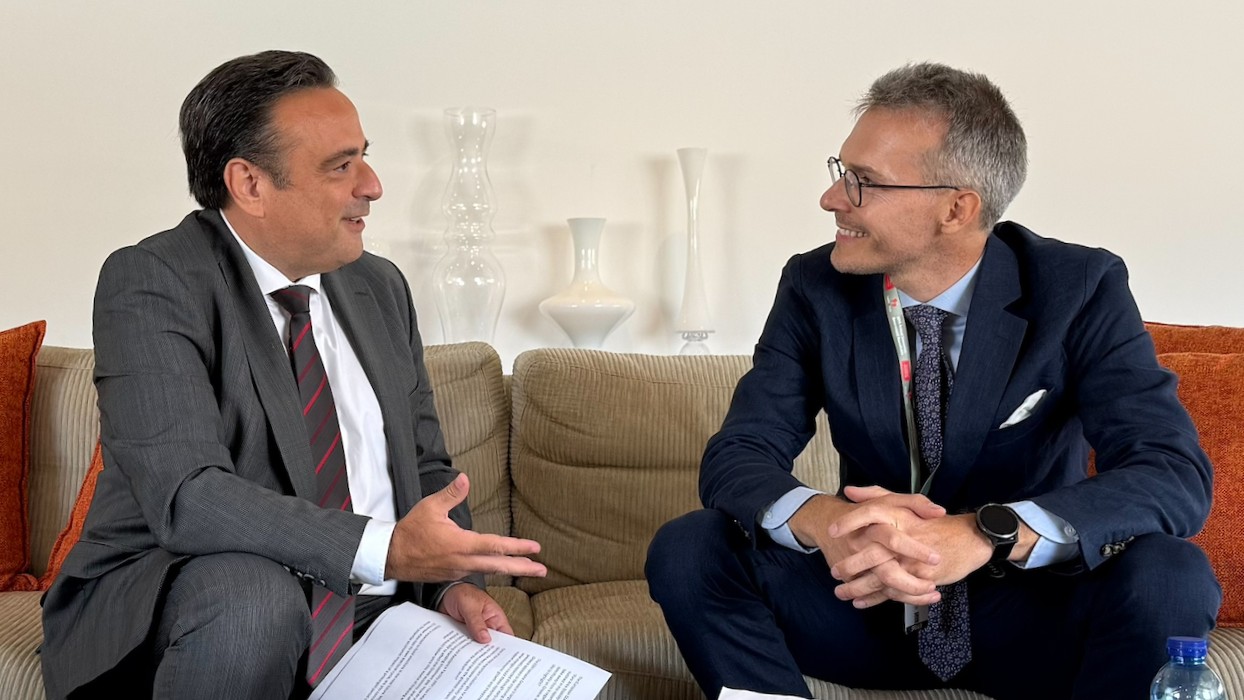
Interview with Robert Blotevogel, ESM Country Team Coordinator for Greece
Insider.gr
20 July 2026
Interviewer: John Papageorgiou
Translated from Greek, original language: English
John Papageorgiou: Given the significant financing needs linked to defence, competitiveness and other strategic priorities, where do you think the right balance lies between necessary fiscal spending and long-term fiscal sustainability? Where is the "red line" between fiscal flexibility and fiscal discipline?
Robert Blotevogel: There is no doubt that governments need to keep their public finances healthy and sustainable. This should be the basic principle that will guide every subsequent choice. There is a broad political consensus that it is necessary to increase defence spending. Greek Prime Minister Kyriakos Mitsotakis has said that Europe is fully committed to this goal. Under the European fiscal framework, there is some flexibility to increase defence spending in the coming years. However, in the long term, a permanent increase in defence spending cannot be financed through additional borrowing. This is not a sustainable solution. Ultimately, higher defence spending will require fiscal space, which will have to be created through re-evaluation and reprioritisation of spending elsewhere in the budget. I would like to emphasise one more crucial point: it is not only a question of how much money is being spent, but also of the way in which it is being spent. This is especially important in the case of defence spending.
We examined this issue in great detail in the recent edition of the Euro Area Stability Watch. The report shows that, if the right choices are made, defence spending can create significant positive effects for the economy as a whole, if directed towards research and development, productive activity and the adoption of new technologies. By positive secondary effects (spillovers) we mean that, by increasing defence spending, countries can actually boost growth in the economy as a whole. And when the economy grows, states can collect more tax revenue, simply because the tax base is broadening. To give an order of magnitude, for every euro that countries spend on defence, about 53 cents can be recouped – that is, self-financed – through higher growth and increased tax revenues. This creates a win-win situation: higher defence spending, but at the same time positive effects on the wider economy, which boost public revenues in the future. In summary, the critical issue is not only how much money is spent, but also how it is spent. This is a point that we consider particularly important to highlight.
Contact