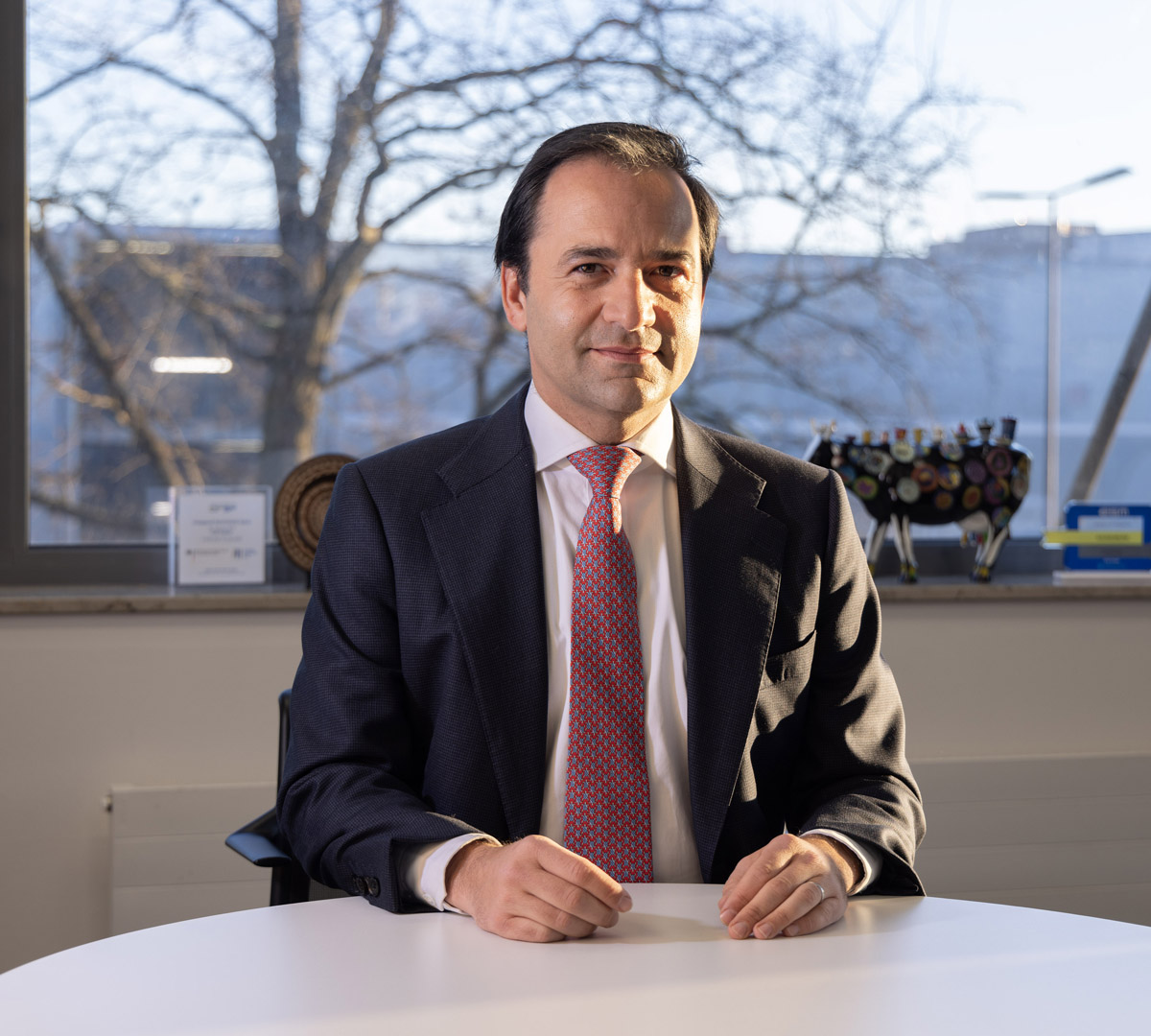

Podcast with Kalin Anev Janse, ESM Chief Financial Officer
Recorded during Global Funding and Financing Summit, Luxembourg
27 January 2026
Moderator: Andrew Keith Walker
Transcript
Moderator: I caught up with Kalin Anev Janse to talk about the European success story in capital markets and all the positive trends that are going to take us into 2026.
Kalin Anev Janse: What was exceptional last year, 2025, is that European markets really beat US markets. This is something no one expected. But if you look at equities, the CAC 40 in France, the Stoxx Europe 600, the DAX in Germany and Italy, especially, they outperformed the Nasdaq and the S&P 500. And I think this is really quite exceptional because the narrative has been Europe is doing bad, America is doing great. But if you purely look at equity investments, that is the case. But it goes even further than that. If you look at debt markets, a ranking of the top economies in the world, by the Economist, seven out of the top 10 are European, with Portugal at number one. And markets love it. So, you see a real contraction in spreads. I think the hidden story of 2025 was that actually Europe was the top performer in the world.
Now, one of the big topics of conversation in this year's GFF is all about digitalisation, especially digital currencies and digital tokenisation. These are the disruptive vectors that could be changing things for market participants. Now, you've written quite extensively on this. What's your view on the future of digitalisation in the securities industry?
As ESM, and for me as CFO, we have been very much pushing for the wholesale CBDC [Central Bank Digital Currency], the wholesale digital euro. And now this year, with the ECB working on Pontes and Appia [initiatives designed to modernise how financial markets in Europe settle tokenised (DLT‑based) transactions using central bank money] as new technologies that they want to launch, it's something that we're really supportive of and really want to be part of, both as an investor and as an issuer. In the past, we wrote op-eds about this, we wrote working papers about it and how this should look like. But here I think Europe really can step up its game. That's one area. The other area is artificial intelligence (AI). At the ESM, we have invested a lot in AI. We work with the University of Luxembourg, because we are now in Luxembourg, with three PhDs that are looking at how to optimise capital markets and how to optimise bond markets. So, I do believe Europe has a technology edge and can even boost that further.
And we've talked a lot about the Capital Markets Union on the show, and then we've talked about the Saving and Investments Union, as it's now called. But actually, there are some developments taking place there that really revolve around technology and means that might actually deliver within this EU Commission.
I think one of the great things about the Capital Markets Union, the Saving and Investments Union, is that we now see some of the game changers really coming to play. The first one is European safe assets have been growing. So, 15 years ago, we had only €400 billion of European bonds out there from the European Investment Bank. Now we are at €1.4 trillion. So, it more than tripled in number. And EFSF, ESM, my bonds are part of that. I think that's one of the game changers. The other game changer is that we're looking at more European harmonisation in supervision, on securitisation. There are big initiatives on the side of the [European] Commission. And I think what we are trying to do is to bring all these savings - we have more than €10 trillion in savings on bank accounts - into the market in equities. So that, I think, is where we have a real European edge.
You were at Davos giving some important talks at the World Economic Forum. A lot of the news was dominated by those headline items with the American delegation and President Trump. But underneath that, behind those headlines, there was an awful lot of more good news coming out, wasn't there? About European cooperation and relationships with Canada. Tell us more about that insider view from Davos.
So, the first topic, of course, was geopolitics. You could not avoid that with everything happening around the world. But the underlying topic was artificial intelligence. I chaired the CFO community of all the CFOs globally at the World Economic Forum. Our discussion was really, "how are we going to boost AI"?
The CFO of OpenAI was part of the panel, also of one of the data companies. CFOs, two years ago, saw it as something new. ChatGPT was just dropped. Today, every CFO is using AI as part of their business or also as an investment. But if you look at the political story, to come back at the very start, I think the message out of Davos is we need more Europe, more European safe assets, more European integration. I think this is good for Europe, but it's also good for the world, for the US, for Canada, for China, and the rest of the citizens around the globe.
And talking of more Europe, there is a fairly good chance. Now, I know we've worked this out, but I think it's important just to record it for posterity. There's a fairly good chance that Scotland could face Holland in the first knockout stages of the World Cup. What are your predictions there?
As a Dutch person. I'm very proud of the Dutch team. I've been many times to the games, and my son, who is now nine, loves it. So, we already were calculating how the Netherlands could go up to the final. And I think what would be really great is at the final in the US, if one of the European countries wins and then to have the World Cup be given to a European country. I think that would be a great achievement. But that's just being a football fan myself.
Contact