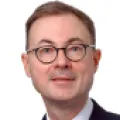
Pierre Gramegna at Eurogroup press conference, 9 November 2026
Remarks by Managing Director Pierre Gramegna
Press conference following Eurogroup meeting
Brussels, 9 November 2026
Good afternoon, everyone. I will make a brief intervention on the four items on the agenda.
First, I will speak about macroeconomic and fiscal developments in the euro area. Borrowing costs across the euro area remain elevated, affecting governments, businesses, and households alike. And they are likely to remain elevated for longer. We must acknowledge that investor concerns are now focusing more on European sovereigns. This is the most notable shift in investor sentiment compared to earlier this year, and it is reflected in higher sovereign spreads in Europe.
In this environment, credible fiscal policies are particularly important. Complying with Europe's fiscal framework is key to ensure fiscal discipline. It helps preserve market confidence while encouraging countries to rebuild the fiscal space needed to respond to future shocks. Complying with the fiscal framework is a precious anchor and boosts credibility.
On the takeaways from the recent IMF Annual Meetings in Bangkok, I would also like to mention the 11th High-Level Dialogue of the Regional Financing Arrangements, which we as ESM co-organised with the IMF, in the presence of the Managing Director Kristalina Georgieva. A key focus of our discussions was how artificial intelligence is transforming the global economy and the financial stability implications of its rapid adoption. We agreed to strengthen our cooperation in this area.
Speaking of innovations and technology, let me turn to digital finance. I would like to congratulate the European Central Bank and the Eurosystem for the successful launch of Pontes in September. Two weeks ago, the European Stability Mechanism became the first European supranational issuer to launch a digitally native bond using Pontes to settle the transaction. This demonstrates that digital innovation can operate within the safeguards on which investor confidence depends, paving the way for others to do the same. The ESM stands ready to share its experience with others. I published an op-ed on this important move last week, which you can find on our website.
On banking union, the ESM fully supports the SRB's call to get the common backstop up and running. The big open question is still the following: if a large bank fails, or several at the same time, will there be sufficient funding to manage their resolution effectively? This is also the question of liquidity in resolution. The way forward is clear: the amended ESM Treaty should be ratified so that the backstop can become operational. But that is not sufficient, and the ESM is ready to help solve the broader issue of liquidity in resolution.
Finally, on defence spending, I'd like to congratulate the President for the excellent and timely idea of inviting the Secretary General of NATO, Mark Rutte, for a debate that was really interesting. As I highlighted in the meeting, how we spend matters much more than how much we spend. If defence spending is directed towards capital, research and development, innovation and stronger European supply chains, the economic returns can be significant. The ESM has estimated in the Euro Area Stability Watch, which is a document we published in July, that around 53 cents for every euro spent could come back through stronger growth in higher tax revenues. If defence spending is not leading to innovation and productivity, the return is half as much.
So if I can leave you with one message, it is this: Europe's task is to make every euro count for our security, for our capabilities, and for our economy.
Response to question on whether the ESM could help finance defence spending in Europe:
On your question about the ESM: we have done a review of our toolkit and we have come to the conclusion that the toolkit that we have available, which includes the instruments we used during the euro crisis, are fit for purpose, and second, that the precautionary instruments that we have in our portfolio, which were never used in the past, could be helpful.
What needs to be understood is that the ESM cannot finance projects. We're not there for that. The ESM is there to help countries that have fiscal issues. But countries turn to the ESM when really the situation requires us to be active. There are lots of other ways before that; we are a lender of last resort. In that sense, nothing has changed. And we have heard about all the instruments and escape clauses that have been put in place. Obviously, this has eased the pressure on countries. And so, for the time being, we do not need to roll out our instruments.
Good afternoon everyone.
Contact