
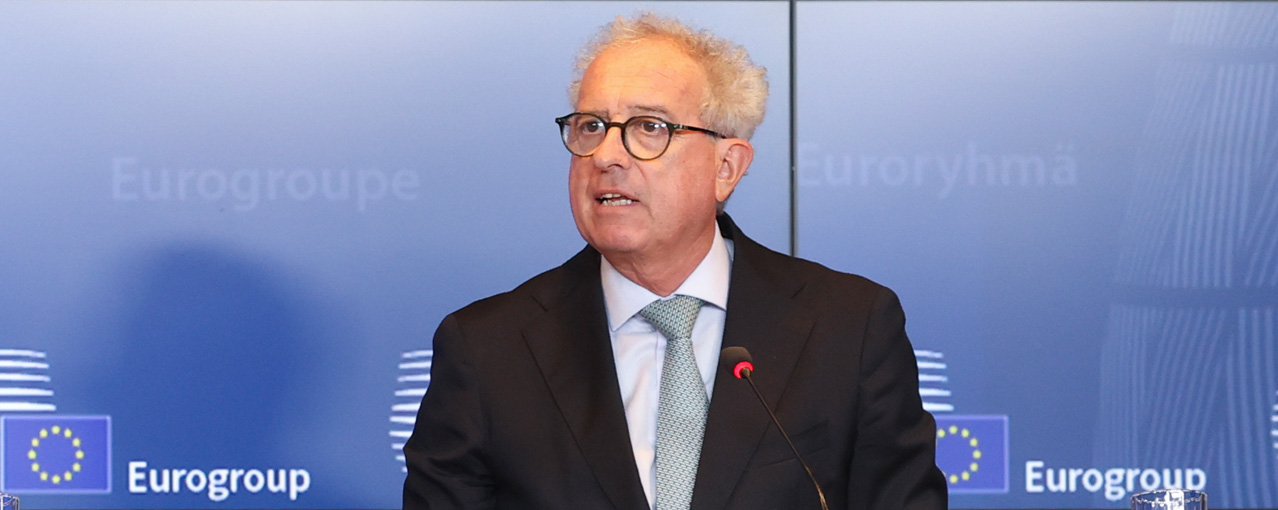
Remarks by Managing Director Pierre Gramegna
Press conference following Eurogroup meeting
Luxembourg, 8 October 2026
Good evening, everyone. I'd like to echo the discussions that we had today, and many things have been said by Kyriakos and Valdis. So, I'll be brief.
Let me first talk about the impact of energy markets on the euro area economy, because that was the discussion that took most time. Higher energy prices are adding to inflationary pressures. If this continues, it will further contribute to tighter financing conditions and higher borrowing costs for governments.
Compared to 2022, the shock is smaller, but fiscal space is more constrained, and interest expenditure is rising. This calls for targeted, temporary, and credible responses, thus underpinning compliance with the Stability and Growth Pact. Broad-based support measures are more difficult to justify when borrowing costs are higher and debt vulnerabilities remain elevated in many countries. At the same time, this episode reinforces the case for investing in Europe's energy resilience through diversification, stronger networks, and deeper market integration.
The discussion on the effectiveness and efficiency of public finances is a very important topic for the ESM. Today's discussion showed that there's a lot to learn about this. Higher interest costs, increased defence spending, and the end of escape clause flexibility after 2028 mean that governments will need to make more effective use of public resources that are limited. Let me highlight what I see as guiding principles.
First, governments should collect more of the taxes that are already due before considering new taxes, and digitalisation can help improve compliance, as Greece has demonstrated under the leadership of Kyriakos Pierrakakis.
Second, budgets are characterised by spending that is already committed from the outset - on pensions, healthcare, public sector wages, and so on. This leaves little room to respond when challenges arise. ESM research shows that countries with less flexibility often end up cutting investment instead of other things. So, my message is simple: spending should be reviewed regularly, investment protected, and money should start shifting towards the priorities of the future right now.
Third, policymakers need to prepare for the implications of artificial intelligence, including possible shifts in tax bases and their impact on public resources.
Finally, Europe should maximise the value it derives from higher defence spending. Defence will cost the euro area about €45 billion more per year until 2035 to reach NATO's 3.5% target. The Eurogroup touched on this issue today, and the discussion will continue next month.
Contact