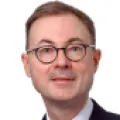

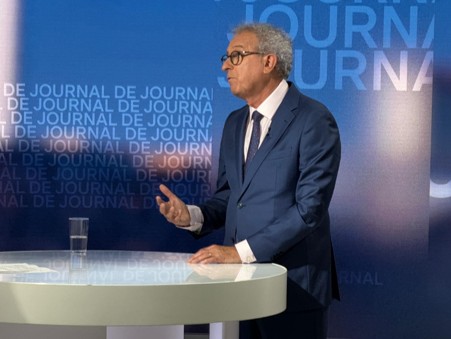
Transcript of interview with Pierre Gramegna
RTL TV Luxembourg
Broadcast on 3 July 2026
Interviewer: Raphaëlle Dickes
Original language: Luxembourgish
RTL TV: In these economically and geopolitically very difficult times, what is the state of financial stability in the euro area countries?
Pierre Gramegna: Yes, we are living in a time of permanent crisis, especially in this decade: Covid, two energy shocks, conflict in the Middle East. All of this constantly puts pressure on public budgets, and not only in Europe, but worldwide. But I must say that, if we look at how Europe has managed over the past six years, there is a certain resilience. Still, it is clear that there is pressure to take on more debt. We are analysing this. One of our roles is to look at all the risks. Especially in times when we are not developing new programmes, we focus on issues like these.
And where do the risks lie? Where do you see them?
The risks lie in the need to comply with the Stability and Growth Pact. Fortunately, it has now been designed a little better, I would say, because we have a long period to adapt to it — seven years compared with the past. Greater emphasis is placed on investment, rather than looking only at current expenditure. I think this helps countries to have a bit more flexibility while still keeping things on track. But if we look at the deficits of the United States, China and Japan, they are drifting as well — perhaps even more than in Europe.
The European Stability Mechanism was born out of the sovereign debt crisis in 2012. But since 2018, no payments have been made to countries that might need assistance. Is the ESM actually still needed?
It is needed for two reasons. First, we are an insurance policy. If your house burns down, you are glad to have insurance. If your house does not burn down for three years, do you cancel your insurance? Insurance must naturally always be kept, and that is what we do. Second, we are also there for preventive action, but mainly also to assess risks and tell countries: “Pay attention to these different issues. What are the major risks?” Defence, climate, other long-term trends that we see, the ageing population. All of that has an impact that stays. And that is why we are also here.
You just mentioned defence. It has been said that because of the high defence expenditure that many euro area countries have now committed to, the ESM could possibly also grant defence loans. Where do things stand on that?
In addition to the instruments we used to help the five countries in the last decade — and this is less well known — we also have instruments such as credit lines that could be granted to Member States, without conditionality attached to reform programmes. These instruments have not been used yet. I think they would be very useful, especially at a time when countries really have to spend billions on defence. We have also made an innovation there: countries can now apply for them jointly. We did not have that before, and it meant that countries hesitated to request such a credit line because it would have created the impression that a particular country was especially weak. But if this can be done as a group, I think it can be handled better and presented better externally. The International Monetary Fund has such instruments. We have them ready; we are prepared.
You also mentioned geopolitical conflicts, the energy crisis, climate crises, and social systems under pressure. Can you already help with these today, or would you need to adapt — and is there also the willingness to adapt?
We are mainly there to help with countries’ public finances. That means that, if countries face risks of financial instability, we can help them. We can also help banks that then pull the country into a crisis. We have done that in the past, but we cannot finance projects. And I do not think that is the intention either. We are the rescue shield that comes in at the very end. So, to finance projects, there are other institutions. I am thinking of the EIB, and I am thinking of Next Generation EU. In other words, we should not intervene in the first instance.
Looking at Luxembourg, our public debt is still below 30% of GDP, but it is growing — growing a lot. We have high defence expenditure, I think €4.5 billion in the next three years alone. A tax reform of €850 million a year is being considered. How difficult is this rapidly rising public debt for such a small, open economy like Luxembourg?
I think that, if we take a snapshot of where we stand today with our public debt — 26.5% — Luxembourg is doing very well; it is the second least indebted country. Second point: if we look at the crises we have weathered over the past six years, the fact that we were still able to maintain practically stable debt is an extraordinary result. The best way to address this is to have more growth. Growth is what enables a country to take on more debt without destabilising the ratio between GDP and debt. And we have a problem in Europe: we are all no longer growing fast enough, also because we no longer have good productivity figures. As Europe, individual countries on average are growing only half as fast as the United States. That is why our performance in Luxembourg — which is still better than in Germany and in other countries — is quite flat. And I think that is the major challenge.
That is the major challenge. What does Luxembourg need to do?
Luxembourg, I think, if I look at the financial centre, is moving in the right direction. We are very well positioned there. I am thinking of fintechs, and of artificial intelligence — what is being done here in Luxembourg. That is, of course, also the most important sector. But I can also imagine satellites and certain areas linked to defence as another important sector in which we could develop further.
You are now getting a new headquarters here in Luxembourg in Kirchberg. Will you stay? Where exactly will you be located, and when will that building, that headquarters, be ready?
Yes, and the good news is that this is now fully confirmed. We have all the internal authorisations at the ESM, and Luxembourg’s Chamber of Deputies approved it unanimously two months ago, so everything can now start. We will have our headquarters behind the three yellow towers of the Court of Justice by the end of this decade. And then we will have the opportunity to be in the middle of Kirchberg, at the heart of Europe.
Contact