

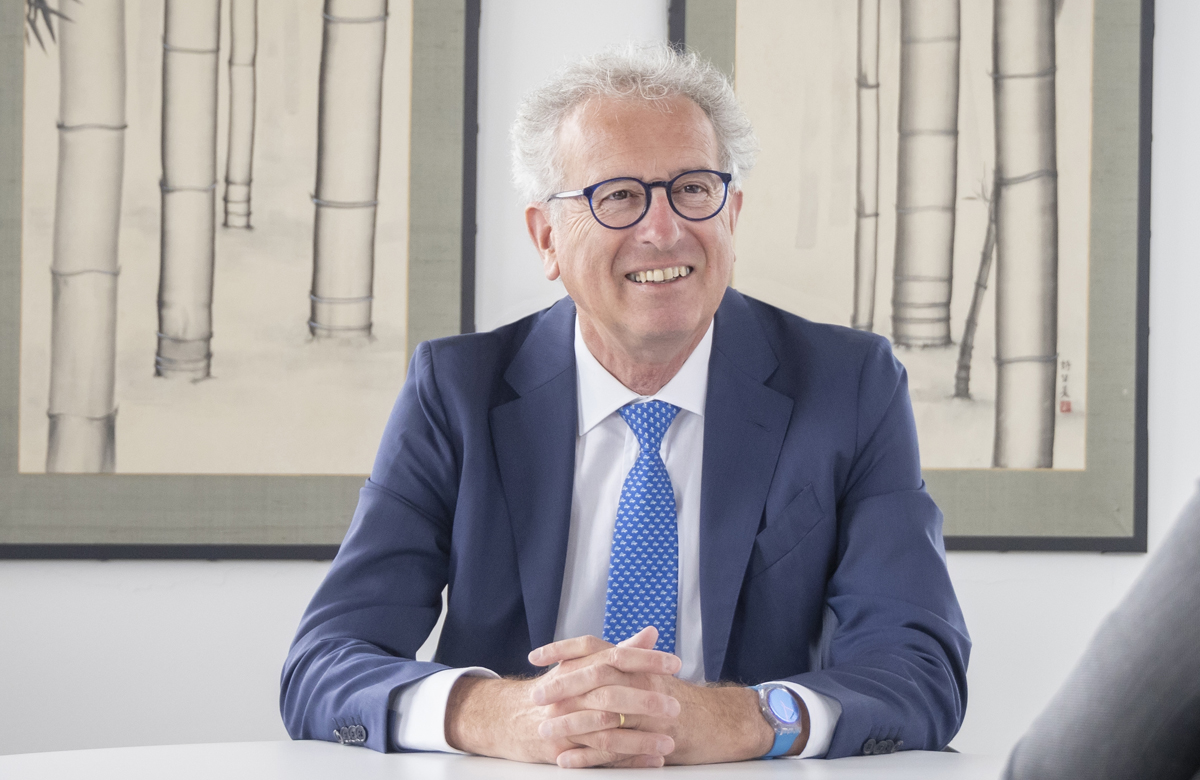
Interview with Pierre Gramegna, ESM Managing Director
Published in Kathimerini (Greece)
4 January 2026
Interviewer: Vassilis Kostoulas
Kathimerini: The European economy is going through a period of high geopolitical uncertainty, which manifests itself on the one hand in the impact of the Trump tariffs and on the other in the need to increase defence spending. Is this a situation that is increasing—or will increase—the debts of the euro area?
Pierre Gramegna: Geopolitical uncertainty and higher defence spending add pressure to public finances, but whether debt will eventually rise significantly depends on credible fiscal plans. Past crises show that strong frameworks and clear communication maintain confidence.
While some countries may see temporary increases in debt to finance strategic investments and defence spending, the priority should be to combine these measures with medium-term plans that safeguard sustainability, in line with the current fiscal rules. In short, resilience and disciplined fiscal paths can prevent uncertainty from turning into a debt problem.
In the longer term, Europe needs stronger economic growth and deeper, more competitive capital markets to support debt sustainability. That would also reduce vulnerability to shocks and make national fiscal adjustments less painful over time.
Greece, however, is currently reducing its debt. Where would you set the benchmark for Greece’s debt-to-GDP ratio, and on what timeline?
First, let me say that the ESM deeply recognises the determination shown by the Greek people over the past years. The journey from crisis to resilience was far from easy—reforms brought hardship—but the country’s efforts have paved the way for a remarkable recovery.
On the same note, I congratulate finance minister Kyriakos Pierrakakis for being elected President of the Eurogroup and Chairperson of the ESM [Board of Governors]. It is more than just a title. It reflects Greece’s achievements but also carries real meaning for the Greek people. It is one of the key roles in European politics, at the helm of a body that stood by the side of Greece in difficult times. The ESM is proud to be Greece’s partner in this journey.
To answer your question, indeed Greece still has the highest public debt ratio in the EU, but what matters the direction of travel. By the end of 2024, the debt-to-GDP ratio had fallen by more than 55 percentage points of GDP compared to end-2020. The most recent European Commission’s projection shows this downward trend continuing.
Of course, a high debt burden is a source of vulnerability for the economy, so further reduction is necessary. But the goal should not be to chase a specific number just for the sake of it. What really matters is finding the right balance between reducing debt at a credible pace, complying with EU fiscal framework, and investing smartly.
Like all European countries, Greece needs to become more competitive and prepare for ageing-related pressures—because ultimately, these are the kinds of policies that will support sustainable growth and naturally help bring the debt down over the long term.
Is the fact that Greece is generating very large primary surpluses due to its decision to reduce its debt more rapidly? What exactly does the agreement between the Greek state, and its European partners and creditors stipulate regarding how Greece must allocate its surpluses on an annual basis?
Greece must ensure that its fiscal commitments are in line with the EU fiscal framework.
How Greece chooses to meet that commitment and the use of the primary surpluses is entirely a sovereign decision. The role of the ESM is to support, offer ideas, and engage in constructive dialogue, not to force policy decisions.
The sizeable primary surpluses observed in recent years reflect the sound policies and reforms implemented by the Greek authorities, particularly efforts to strengthen tax collection, which have proven highly effective.
It’s worth noting that Greece’s strong fiscal position has allowed the government to use part of the post-programme cash buffer, which has been used to repay in advance the bilateral loans from the 14 euro area countries that provided emergency financing during the first support programme (the so-called GLF loans).
In any case, do these excessive surpluses not also have a negative side? In the sense that the accumulation of higher tax revenues puts greater pressure on the real economy?
Sizeable primary surpluses in recent years are largely the result of successful tax reforms and the growth spurred by a more dynamic economy. As tax compliance increases, income that was once undeclared is now being directed to the government, and this may indeed have weighed on growth in the short term.
But there is a clear, more structural and positive side: the sizeable primary surpluses and the rapid debt reduction achieved thanks to these reforms now give the government room to propose measures – like the comprehensive tax reform recently adopted by the Greek Parliament, designed to ease the burden on groups - like pensioners and salaried workers - that were hit hardest during the bailout years. This is a huge benefit for citizens.
Greece still faces a significant investment gap, although it has narrowed in recent years thanks to projects funded by the Next Generation EU programme, the EU’s post-Covid support initiative. Higher revenues now give the government room to close this gap while continuing to reduce public debt.
Finally, a strong fiscal position supports the continued improvements of Greece’s credit ratings. These are key to maintaining favourable market access, supporting a resilient economic outlook, and reducing financing costs. High credit ratings also matter for citizens because they lower borrowing costs across the economy, not just for the government.
A question that is increasingly raised is how the Greek economy will evolve without the Recovery Fund. Is this a source of concern?
The Recovery and Resilience Fund has significantly boosted investment and growth in Greece, with the sixth payment completed at the end of November. Greece ranks among the top performers, having used around 65% of funds. Continued efforts are essential to absorb the remaining funding.
As the RRF’s stimulus fades, growth is expected to moderate, but not to fall sharply. And while NGEU funding will gradually end, support and opportunities for Greece will continue. The country can still rely on EU budget resources.
At the same time, long-term investment cannot rely on EU funds alone. It will require stronger and sustained private-sector investment, which in turn depends on a stable, predictable, and growth-friendly economic and regulatory environment. Ensuring such conditions will be essential for supporting growth in the medium run.
In the meantime, it is often argued—rightly or wrongly—in Greece that the Recovery Fund did not sufficiently support small and medium-sized enterprises and did not trigger the structural reforms needed to change the country’s production model. What is your view?
The predominance of small enterprises, combined with the economy’s reliance on a few sectors, has long constrained Greece’s growth and resilience. Therefore, it was important and welcome that the Recovery Plan included support schemes specifically aimed at SMEs and provided funding that reached a broad range of sectors.
Yet, it would be unrealistic to expect that these measures alone could remove such long-standing structural obstacles.
It is important to make sure productive firms can get the financing they need to grow and operate in a supportive regulatory environment. For example, fostering investments in small, innovative, and growing sectors like IT. This would not only boost growth but also make the economy more diverse.
Speaking of reforms, what are the signs that indicate whether the reforms implemented during the so-called Memorandum era worked or not, and which reforms would you recommend from here on?
Greece’s performance in recent years shows that the reforms implemented during the programme period have delivered lasting benefits. For the banking sector, improved financial health, stronger supervision, and better governance have restored profitability and renewed banks’ ability to support the real economy.
Creating institutions to manage public assets effectively was a key achievement of the programme, boosting both growth and the quality of public services.
Pension reforms were another major pillar, helping to stabilise long-term public finances by unifying fragmented schemes, discouraging early retirement, and gradually aligning benefits with contributions.
Greece can build on this progress by speeding up improvements in the justice system, an essential part of the Recovery Plan and key to attracting investment, and by advancing reforms that boost productivity, from innovation and skills to a more competitive business environment.
These steps will help secure stronger, more sustainable growth. Most importantly, they should improve living standards and ensure that the benefits of growth are shared fairly across the population.
What kinds of investments would you like to see businesses in Greece make in the coming years?
Investment in Greece has picked up thanks to the Recovery Plan, and it is vital to keep this momentum going, making the “right” investments by focusing particularly on areas that strengthen the economy’s resilience and productivity.
Businesses should prioritise scaling up and integrating more deeply into European and global markets. This means investing in innovation, digital technologies, and building partnerships to boost competitiveness and attract skilled talent.
Equally important is attracting strategic investments that improve infrastructure and support innovative firms. The new Hellenic Innovation and Infrastructure Fund - the specialised investment arm of GrowthFund - can play a key role as a one-stop shop to mobilise private capital and drive high-impact projects.
Contact