
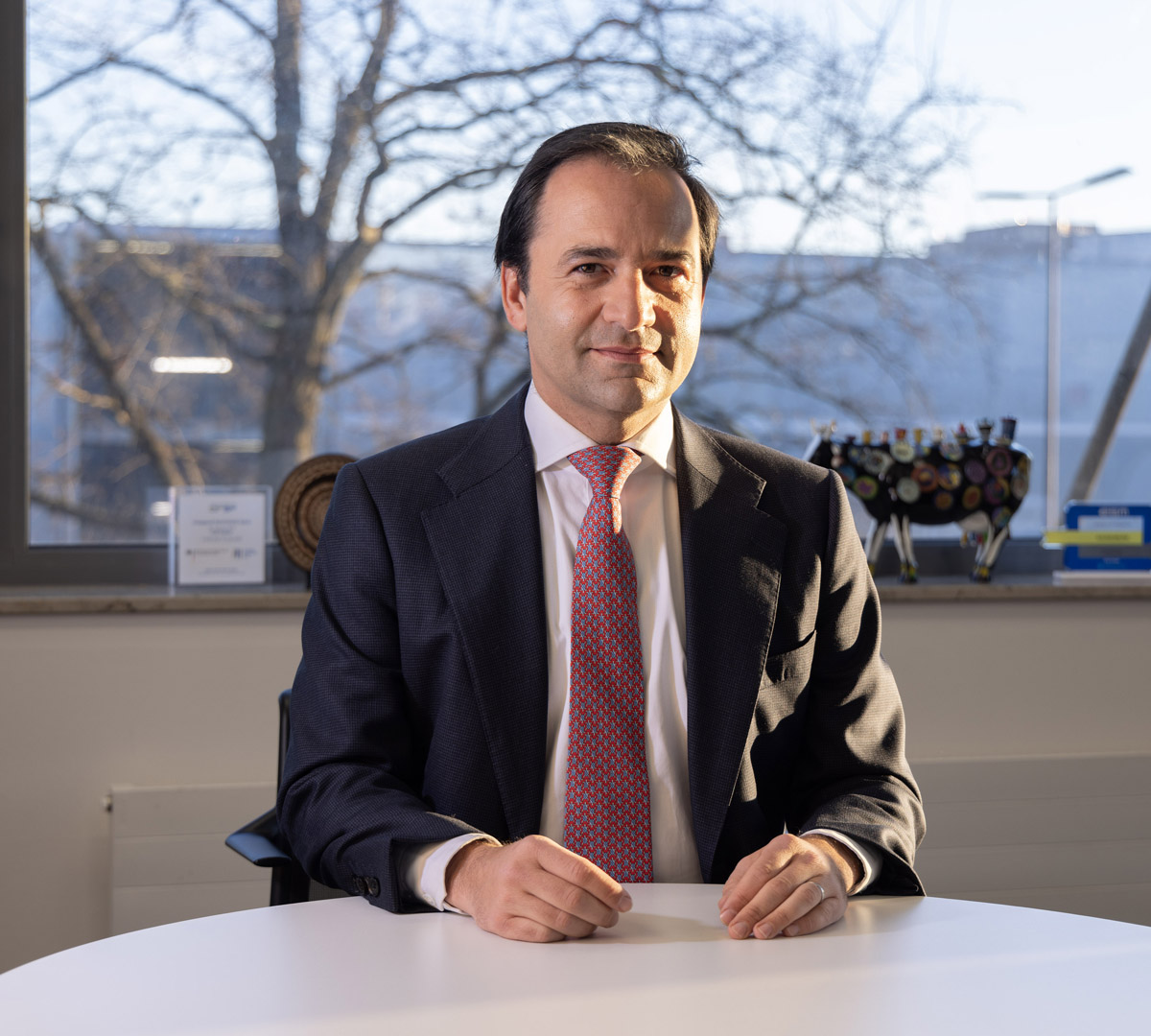
Interview with Kalin Anev Janse, ESM Chief Financial Officer
Published by Boardroom Brief
Conducted on 24 June, published on 17 July 2026
Interviewer: Tim Cooper
Boardroom Brief: You traverse the globe meeting investors, central bankers, and other finance leaders. What have you learnt from visiting so many countries?
Kalin Anev Janse: One of a CFO’s most important jobs is to get investors in. To tell the company’s or, in my case, institution’s story, its purpose and success, by building long-term personal relationships.
I manage both sides of the balance sheet, as we are an investor ourselves with €100 billion under management. Through our bond issuance, the ESM attracts capital from around 1,800 investors around the globe.
Travel gives you a far better understanding of what drives decisions by investors, politicians, and central bankers. For example, how countries responded to the Middle East conflict.
It is important to have personal and trusted relationships. When you have a difficult bond deal, it’s important to be able to phone your biggest investors: “I need your help on this one, please participate.”
You’ve described your time in Luxembourg as “16 wild years”. Tell us more.
I came here, seconded from McKinsey to the European Investment Bank (EIB), in the depths of the great financial crisis (GFC) and euro area crisis, to help coordinate its response. I created the first budget and organisational chart for the European Financial Stability Facility, the precursor of the ESM.
After a year, I said to our managing director, “I’m going back to my job in Amsterdam.” He said, “I want you to [stay and become] secretary general and management board member.” Then I became CFO in 2019 and I’m still here.
The GFC is a moment you’ll never forget. A once-every-80-to-100-year event. But history will show what it meant for Europe. The role we played is still a significant part of my life. It felt like we were taking care of this European project.
The ESM gave the countries that needed help low-rate loans, so they could reform and restructure areas such as tax revenue and government spending. Today, they’re among the best-performing economies in the world, as rated by The Economist.
Are there any parallels between now and the GFC?
It’s completely different now. It doesn’t mean we won’t face another crisis. But we have strengthened the architecture by creating the ESM and multiple supervisory mechanisms for banks, markets, and insurance and pension schemes.
So, we can withstand external shocks better now. For example, when Silicon Valley Bank (US) and Credit Suisse (Switzerland) fell over in 2023, both were outside the euro area. We didn’t feel any spillover. Also, when markets rejected former UK Prime Minister Liz Truss’s fiscal plans, the euro area was shielded from that.
What’s top of mind for WEF CFO Community members?
Bringing together finance heads from the world’s biggest companies creates a valuable exchange about how the future will look.
How does economic instability impact ESM’s everyday financial management?
We designed our funding strategy to stay flexible and diversified. We maintain strong market access and multiple funding sources. Continuous monitoring of market conditions enables us to adapt issuance timing and mitigate concentration risks.
We also need to be able to meet all obligations even under stress, including unexpected outflows such as collateral calls or sudden disbursements. To ensure this, we keep buffers of cash and highly liquid assets.
Then, to anticipate funding needs, we combine detailed and continuous cash flow projections with early indicators and stress signals. And we stress-test cash flows in daily risk management and planning, to assess resilience and ensure contingencies.
How are you using AI day-to-day in your finance function?
Early tests of how AI solutions could support our funding work showed the potential and limits of off-the-shelf tools. This led us to team up with the University of Luxembourg and recruit three PhDs to explore this area. The ESM has many staff with academic experience, which enhances our ability to translate research outcomes into operational value.
We created an internal AI agent called Frankie, after a staff member’s dog. In bond issuance, we’ve used Frankie to help us analyse bank proposal requests.
I also see AI starting to dominate investment, and it’s now embedded in much of our coding work. One portfolio manager in my investment team is leading an exercise to analyse holdings and market pricing to evaluate investment opportunities. If he wrote the code himself, it would take days. With AI, it takes a few minutes for a working prototype.
You’ve also talked about “deterministic finance” moving from AI shock to reality. How does that work in your function?
As the use of data, automation and AI grows, deterministic finance is a shift toward model-driven decision making.
For a public issuer like the ESM, this shift enables faster insights and more responsive decisions as market signals evolve. We’re investing significant effort into identifying causal relationships among complex financial variables to improve quality and timeliness of decisions.
Using AI agents to operationalise these relationships can deepen our understanding of market movements, particularly after major events or policy changes.
You’re an ardent footie fan. Who’s going to win the World Cup?
If President Trump can give the cup to a European nation* and say, “You're the best of the world”, I'm happy.
*[We guess that means Spain then! (Editor)]
Contact